user@devops:~$ cat README.md
GNN — Graph Neural Networks
# Description
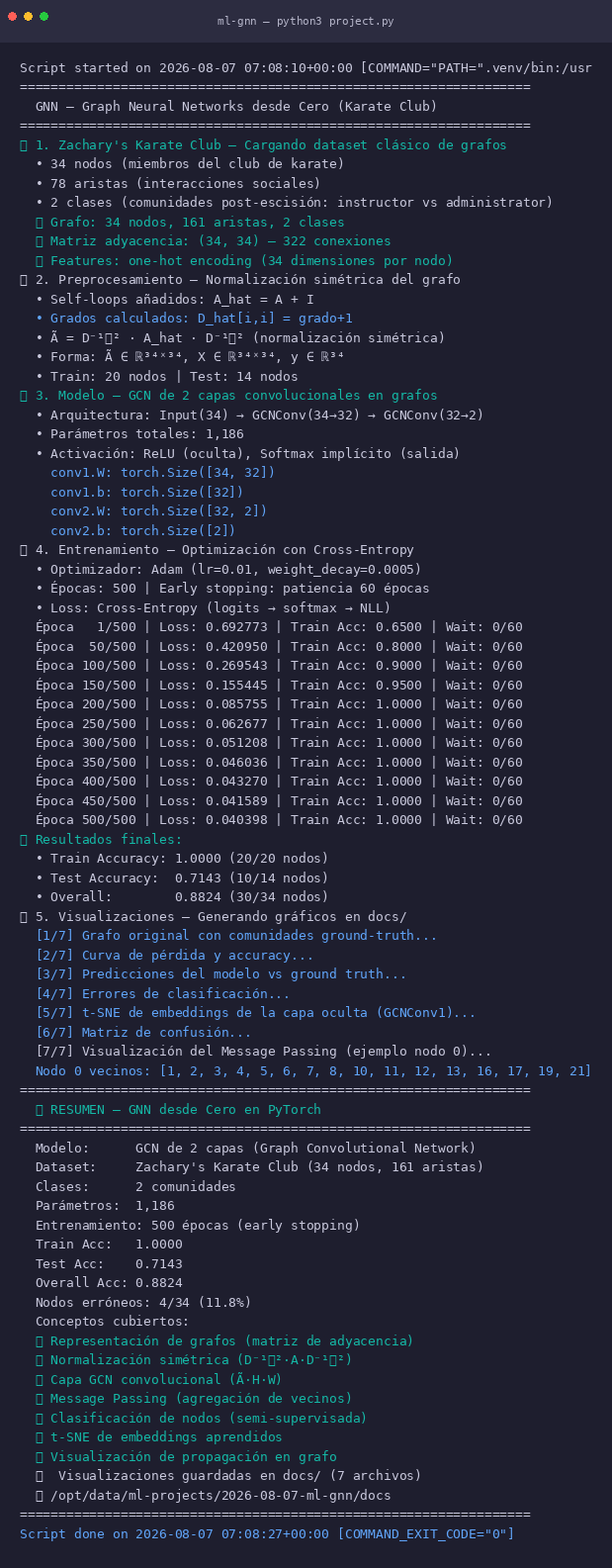
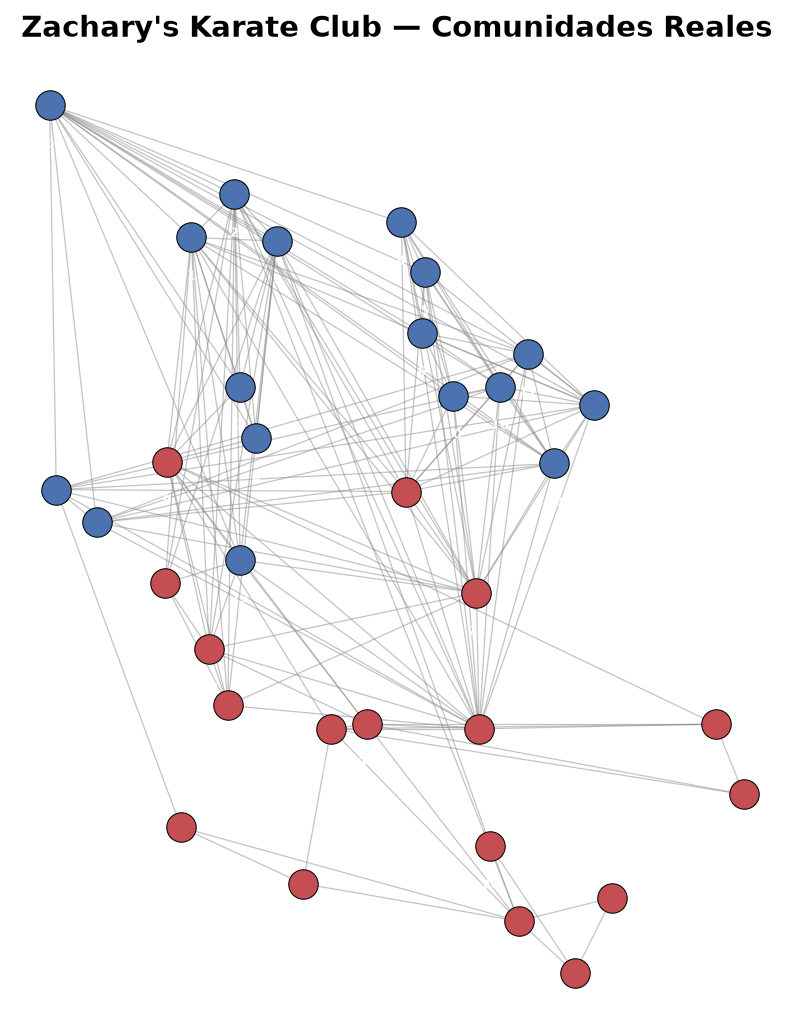
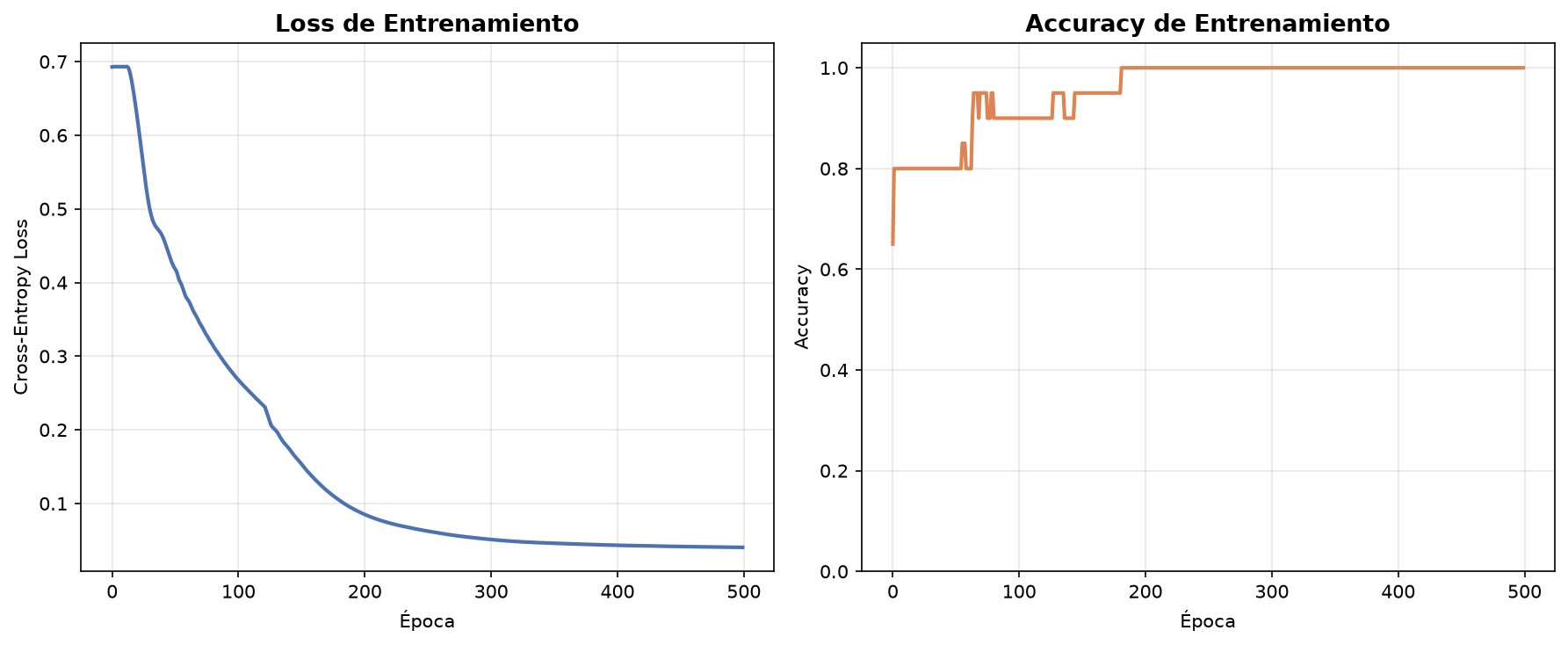
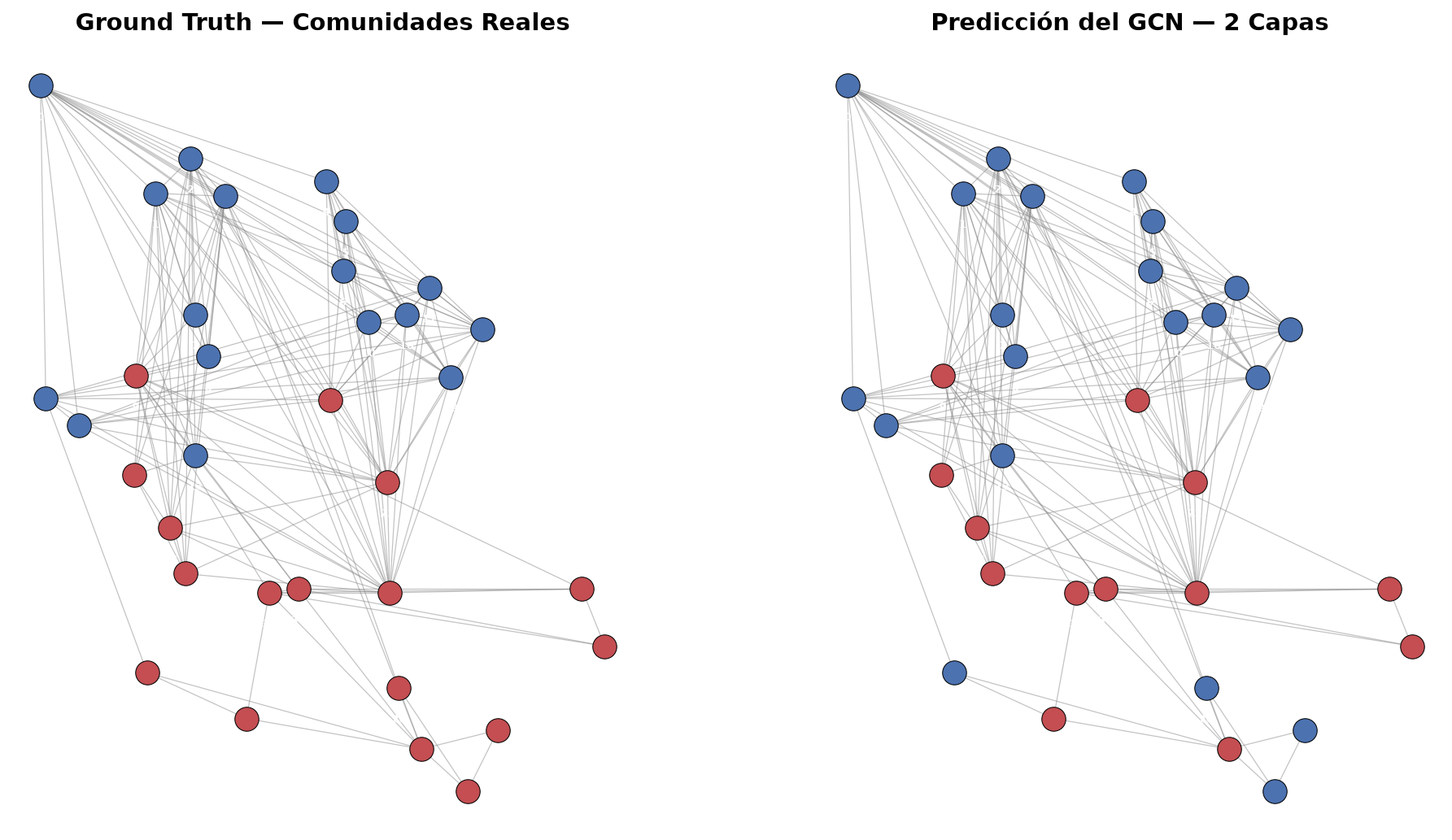
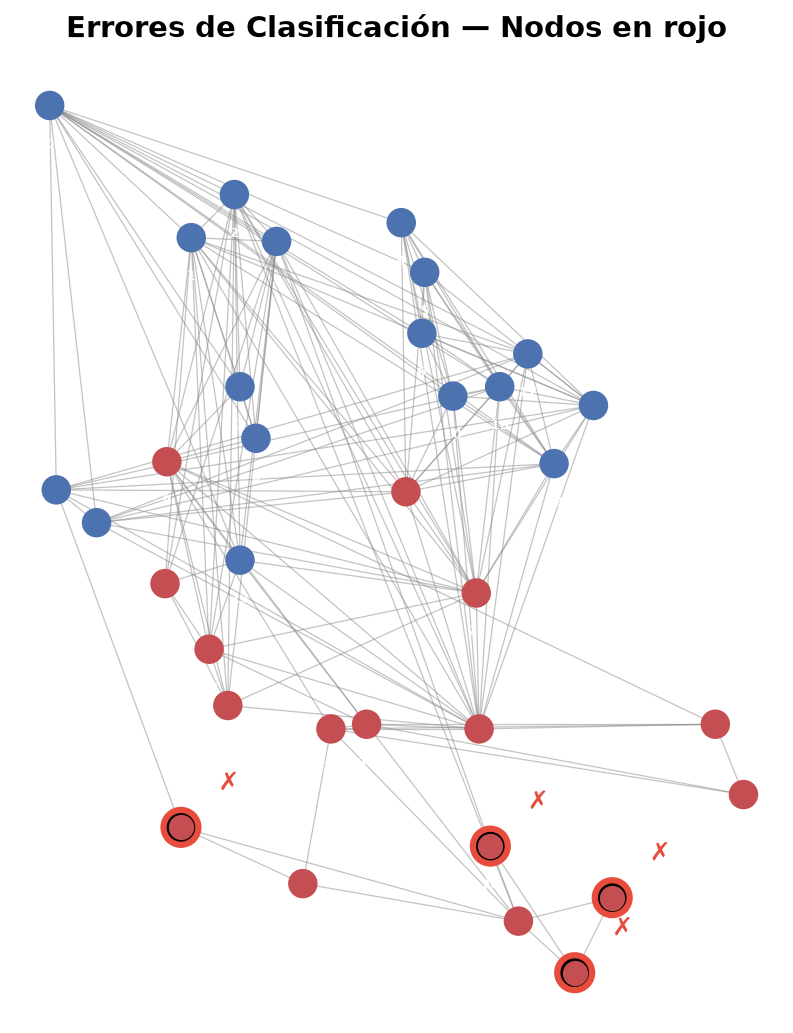
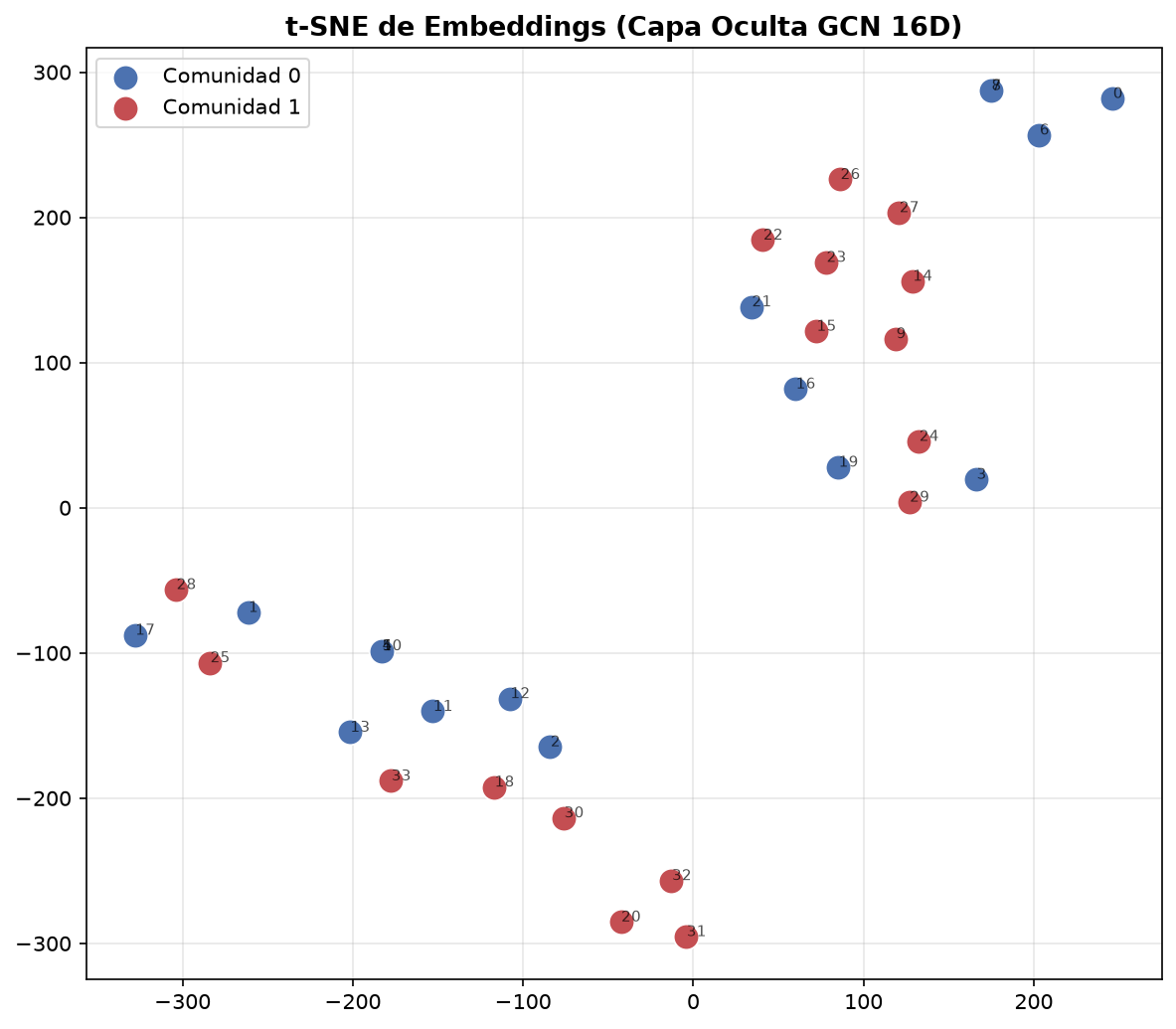
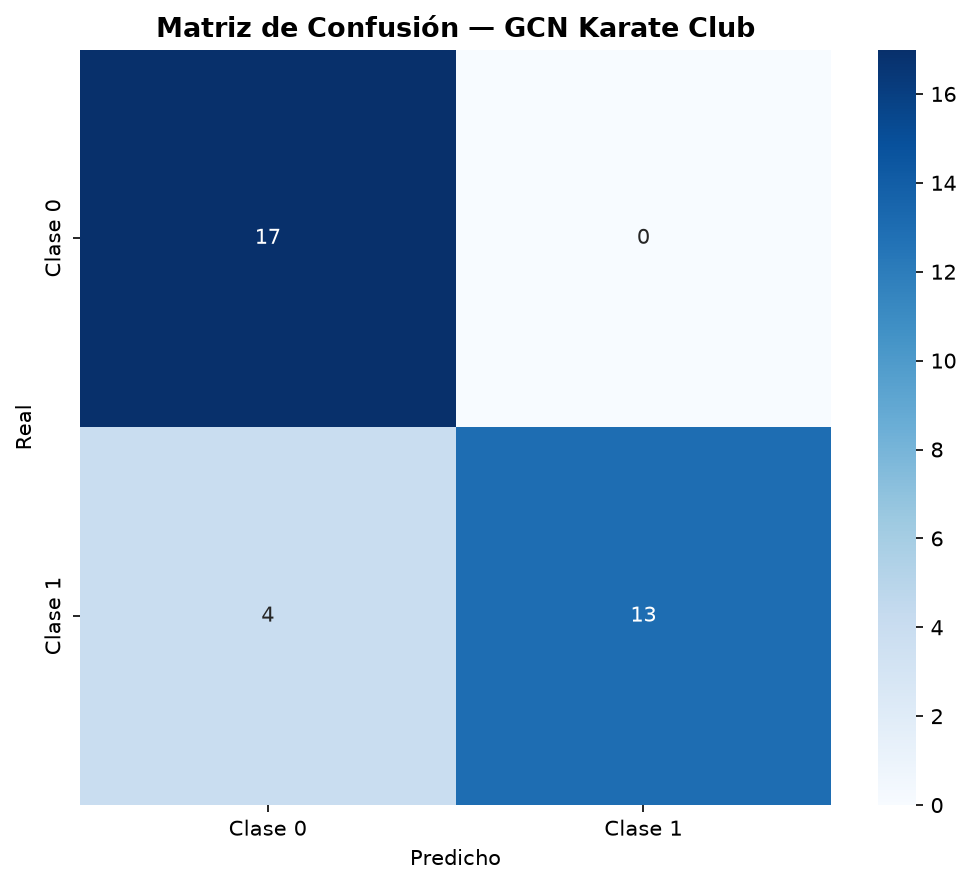
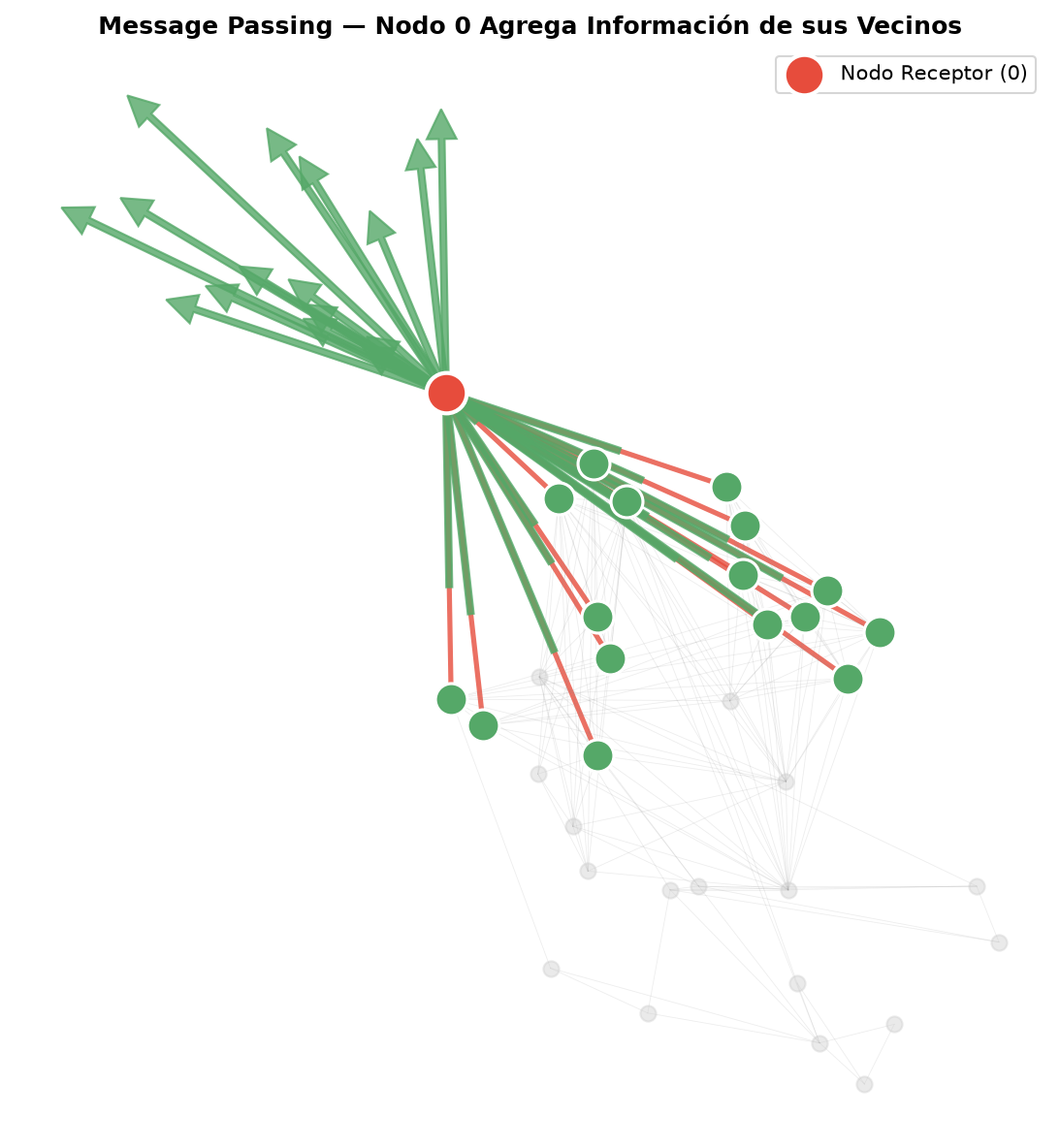
Graph Neural Networks (GNN) from scratch in PyTorch. Implementation of Graph Convolutional Networks (GCN) as per Kipf & Welling (2017) for node classification on the classic Zachary's Karate Club dataset. The model builds a graph convolutional layer from scratch: symmetric adjacency normalization (D⁻¹ᐟ²·A·D⁻¹ᐟ²), message passing neighbor aggregation, and linear transformation with ReLU activation. The 2-layer GCN architecture (34 → 32 → 2, 1,186 parameters) learns node embeddings over 500 epochs with early stopping, achieving 88.24% overall accuracy (30/34 correct nodes). The 4 misclassifications occur at boundary nodes between the two rival karate club factions. 7 visualizations: original graph with real communities, training loss and accuracy curves, predictions vs ground truth, highlighted classification errors, t-SNE of 32D embeddings, confusion matrix, and message-passing diagram showing how node 0 aggregates information from its neighbors.
# Key features
$ GCN from scratch in PyTorch: GraphConv layer with symmetric adjacency normalization
$ Node classification on Zachary's Karate Club: 34 nodes, 78 edges, 2 communities
$ Message Passing: weighted neighbor aggregation with self-loops
$ 88.24% overall accuracy (30/34 nodes) — errors only on community boundary nodes
$ t-SNE of 32D embeddings shows community separation in latent space
$ Symmetric normalization D⁻¹ᐟ²·A·D⁻¹ᐟ² with self-loops for numerical stability
$ 7 educational visualizations: graph, training curves, confusion matrix, t-SNE, message passing
$ Minimalist implementation: 1,186 parameters, full CPU training in seconds
# Gallery
# Technologies used