Featured project
Marlow
Ready-to-wear shop, with guest checkout and a desk
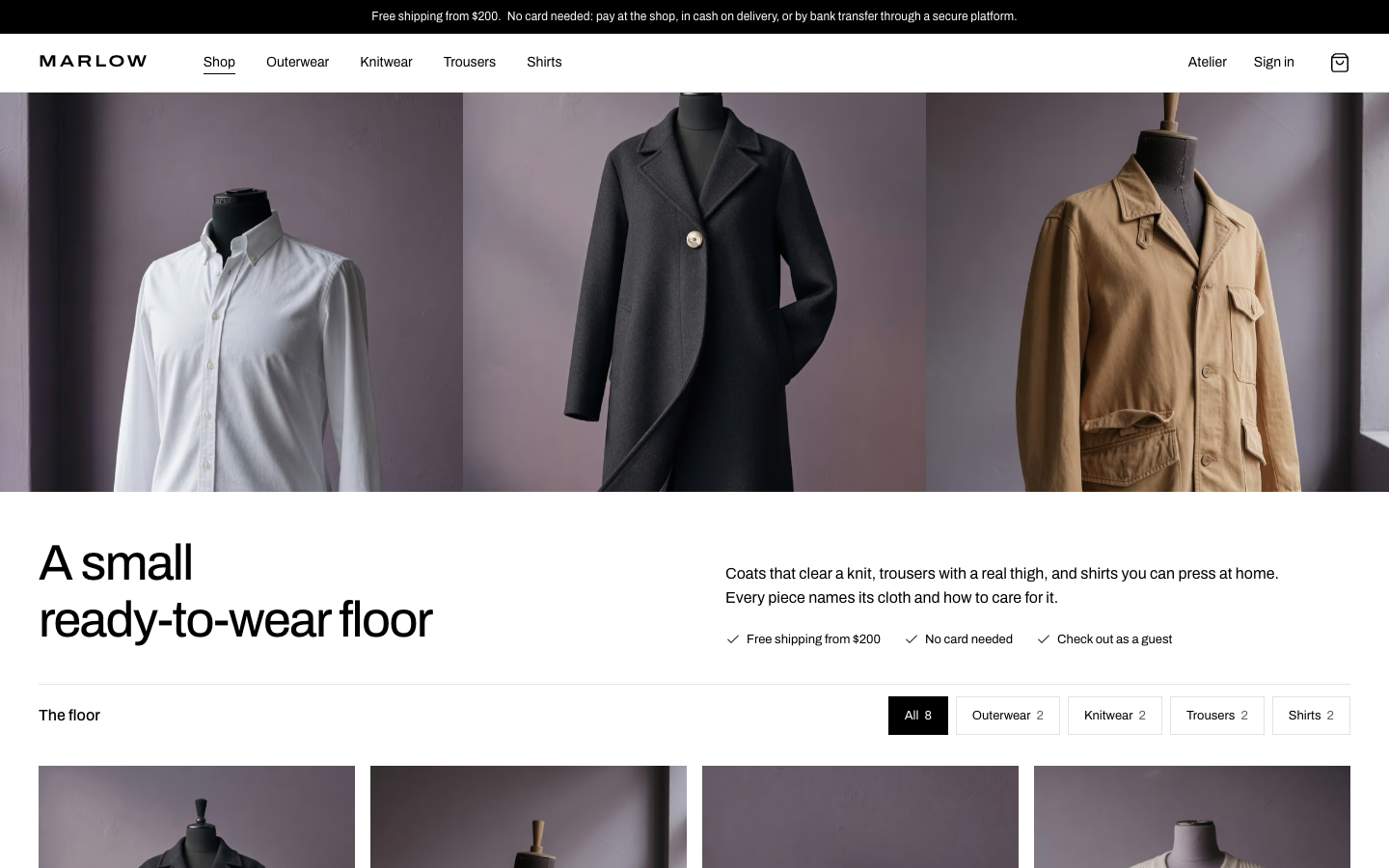
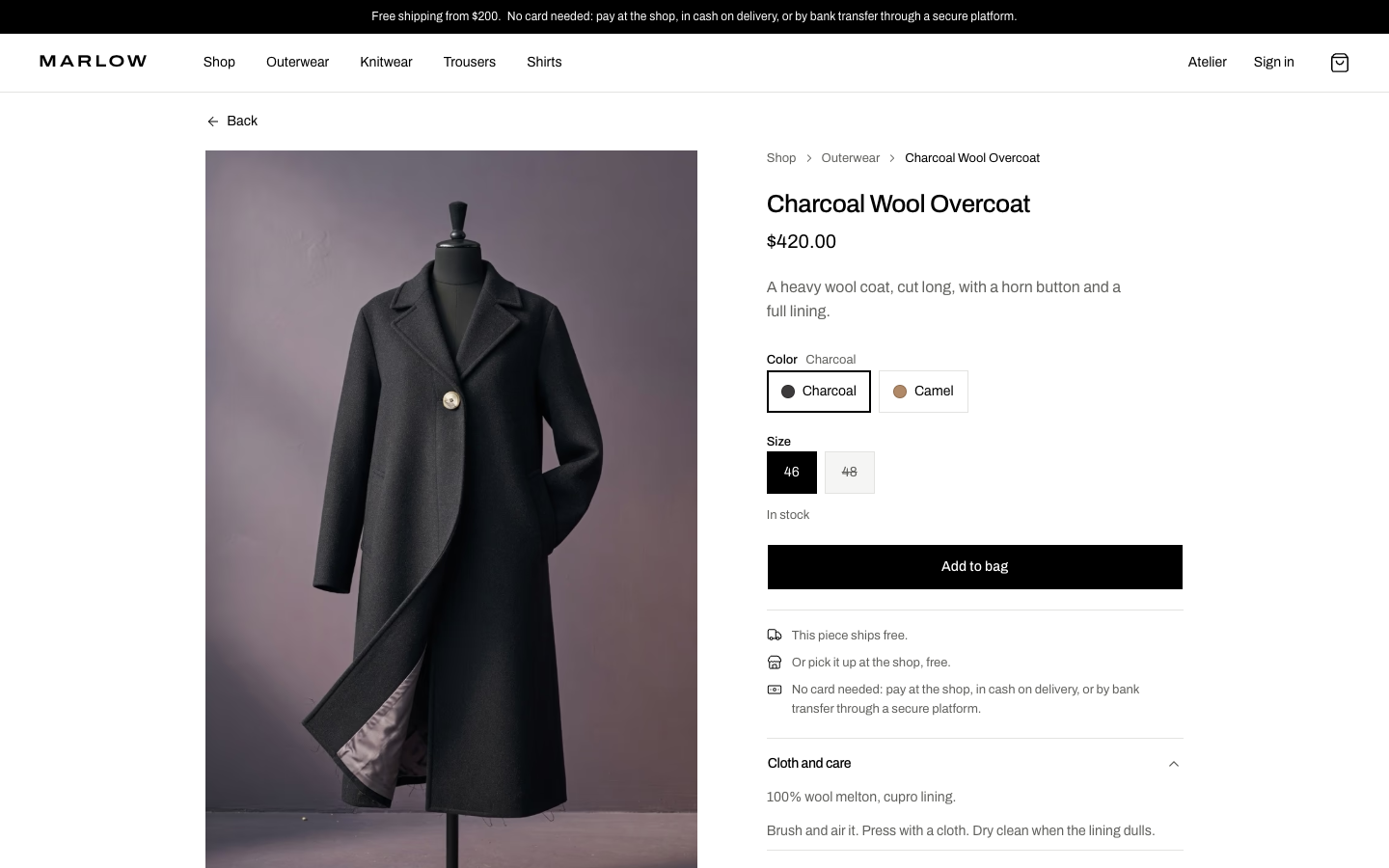
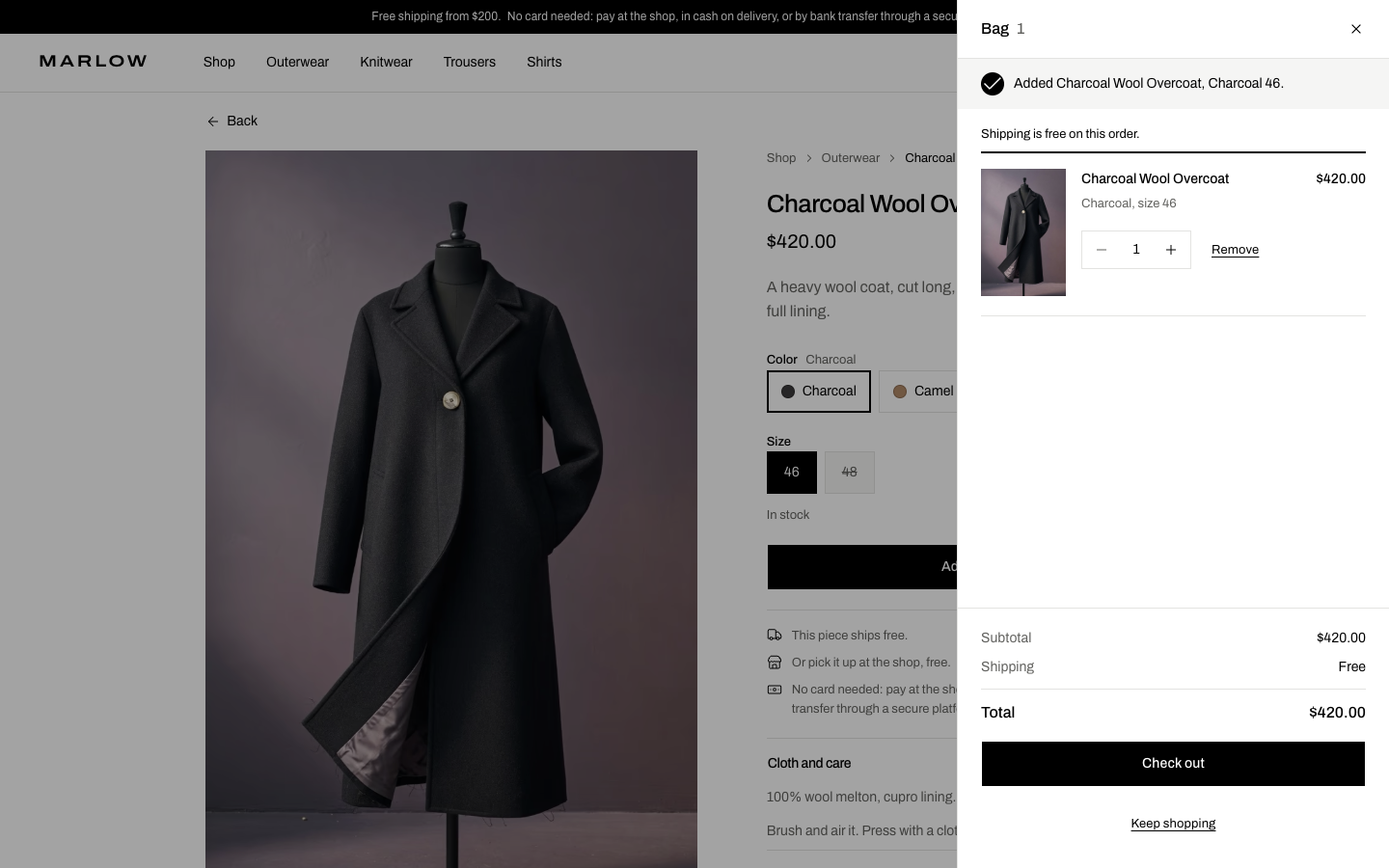
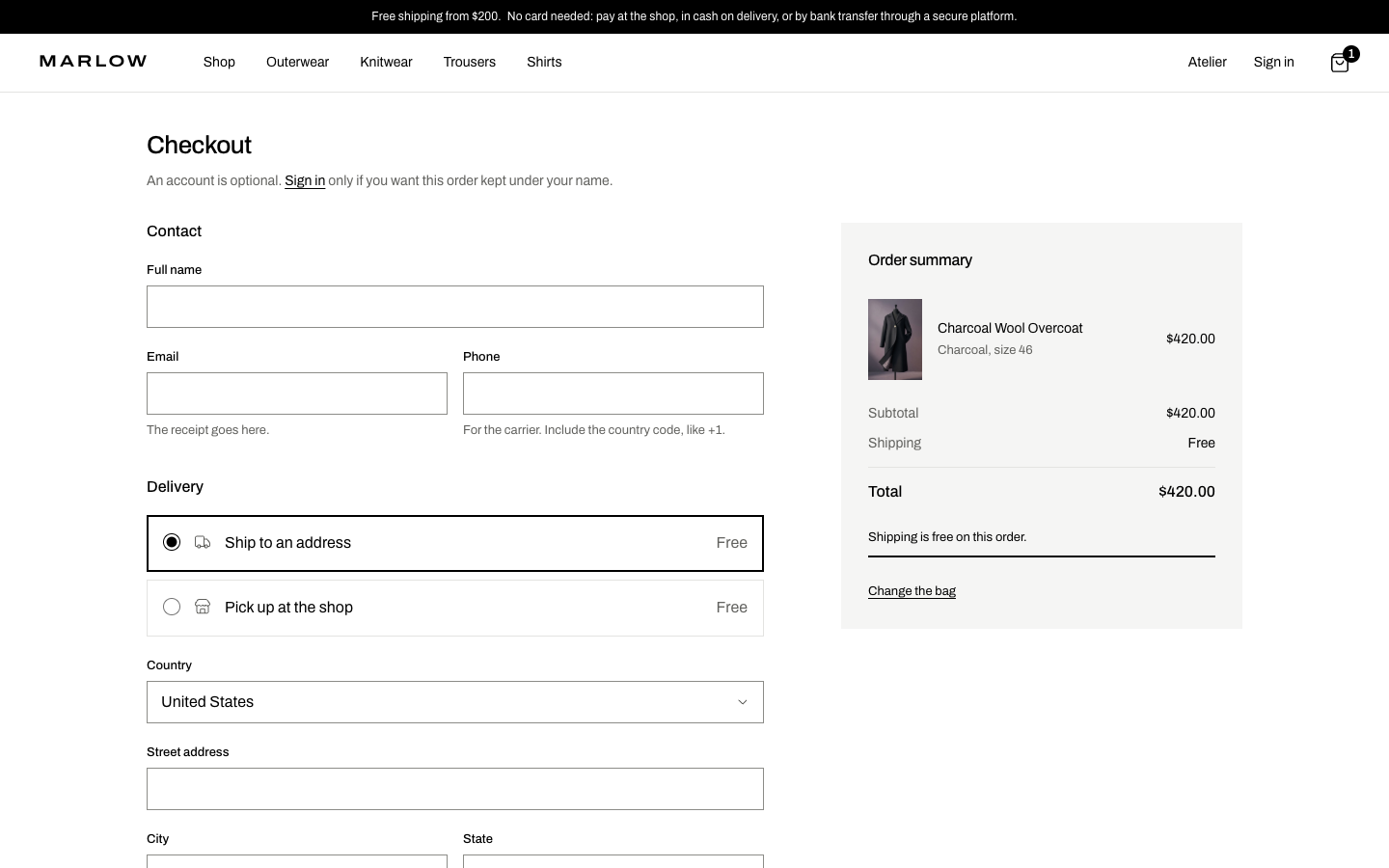
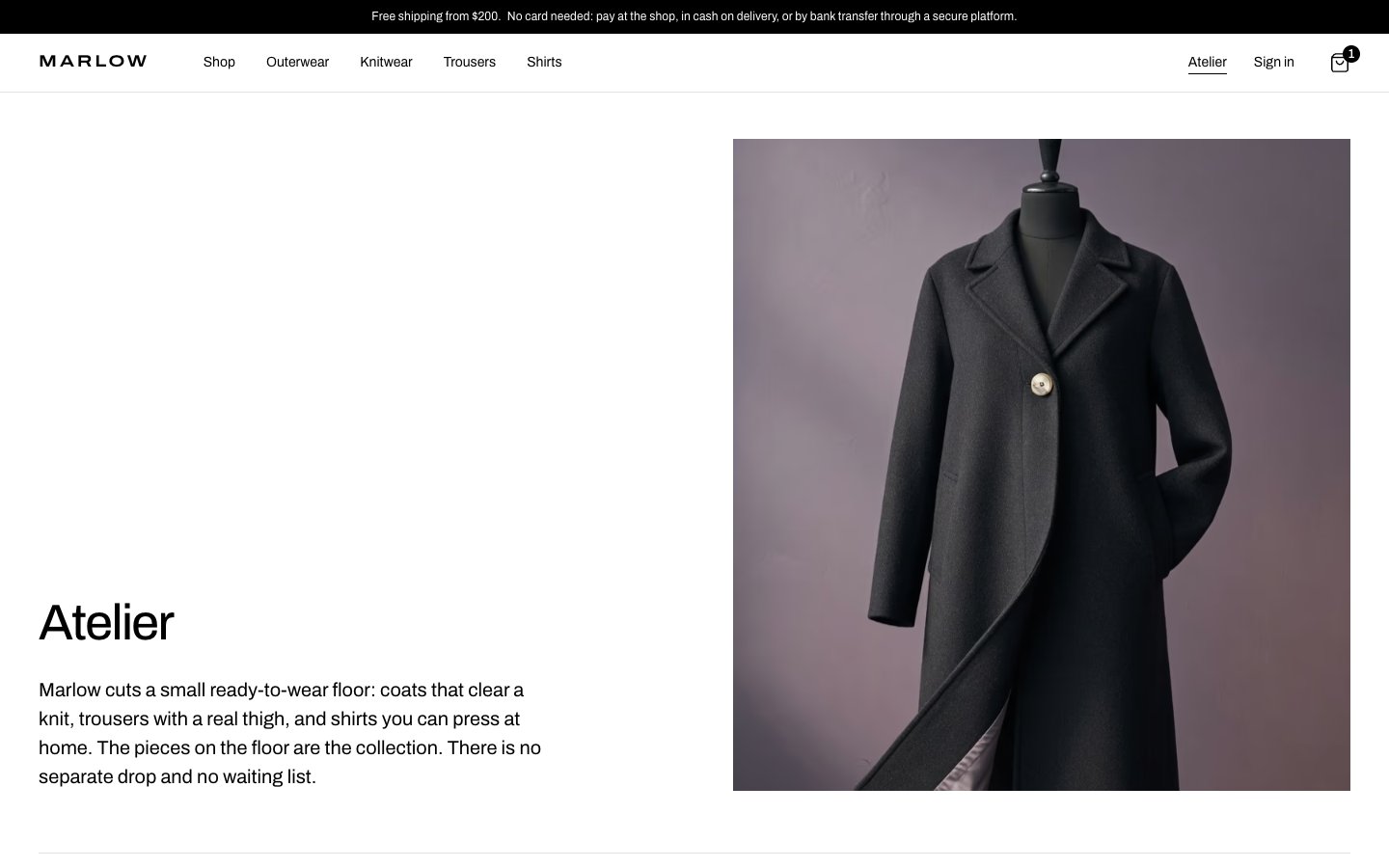
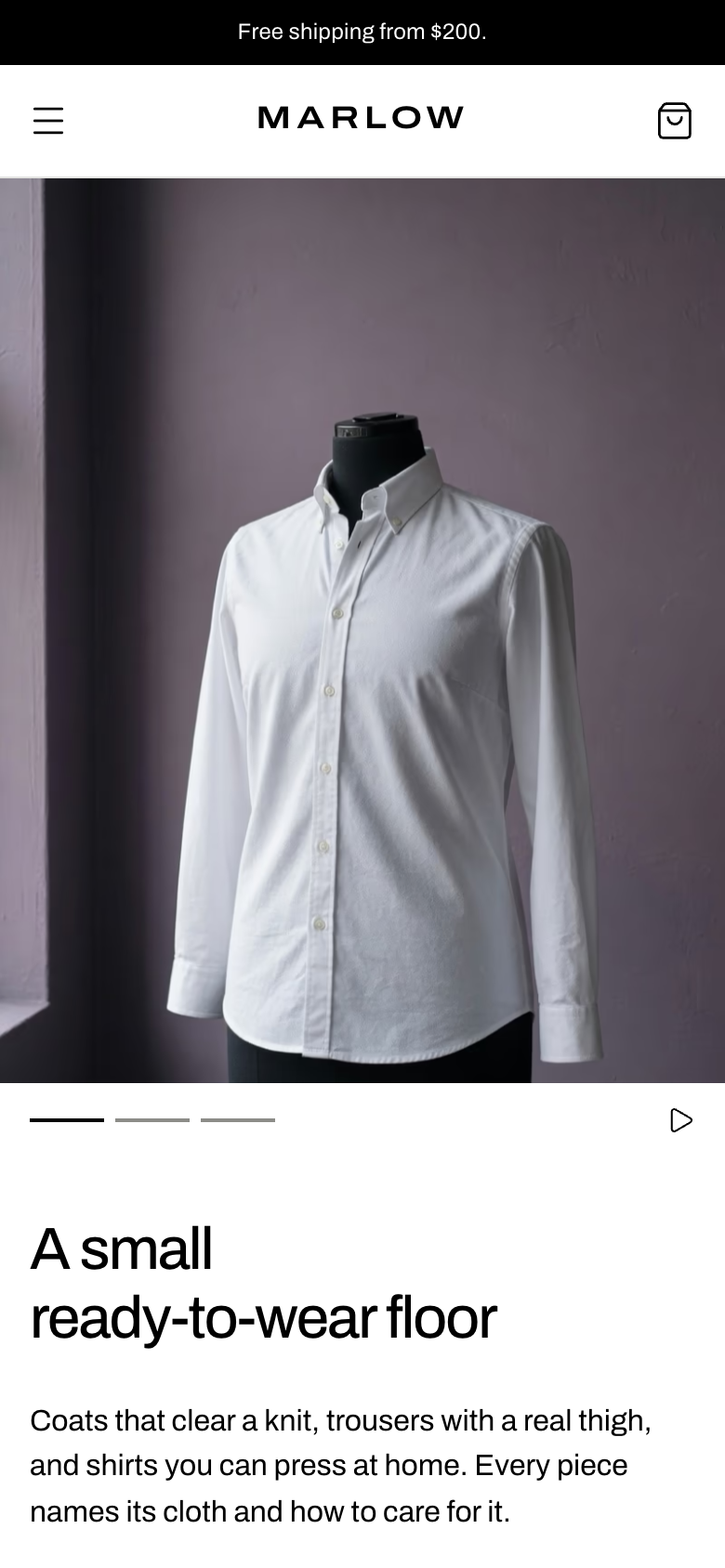
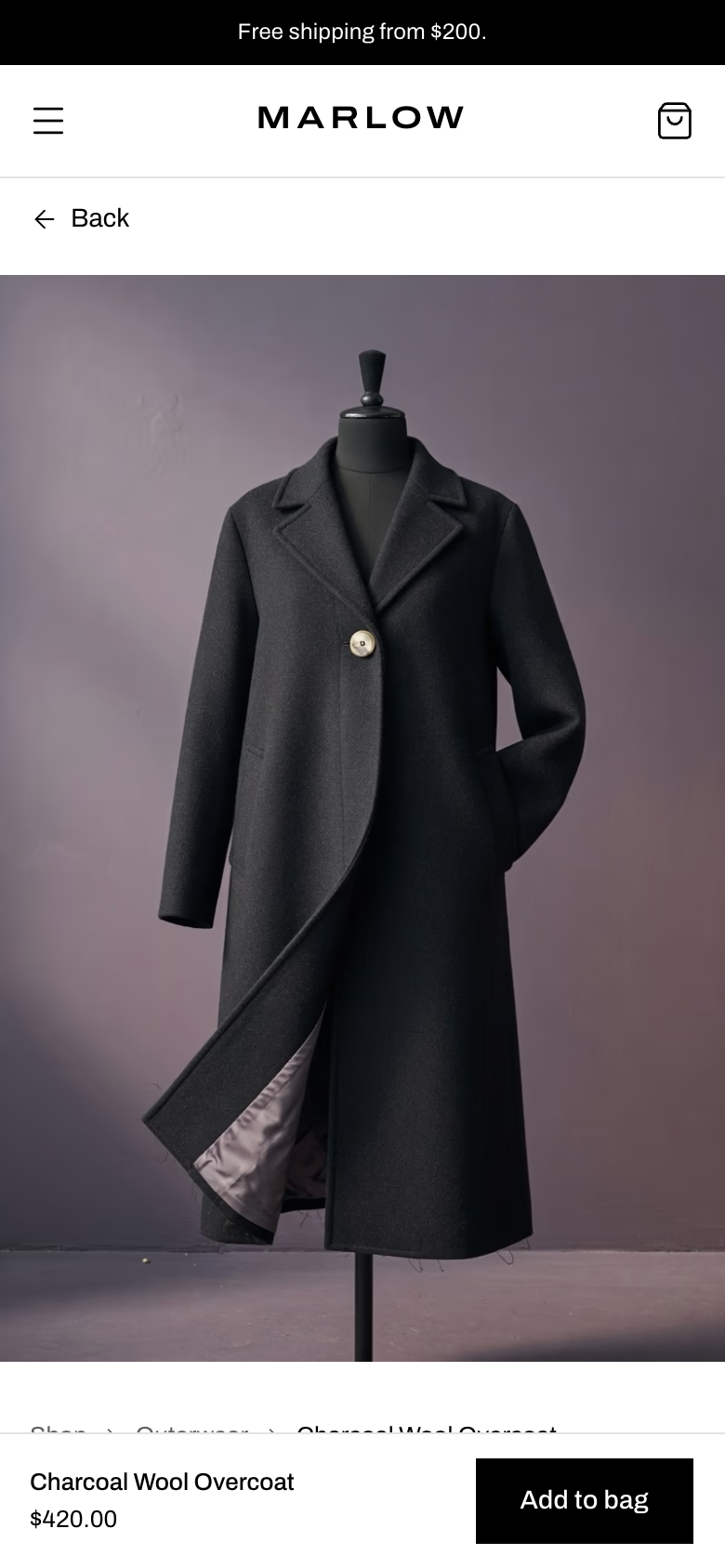
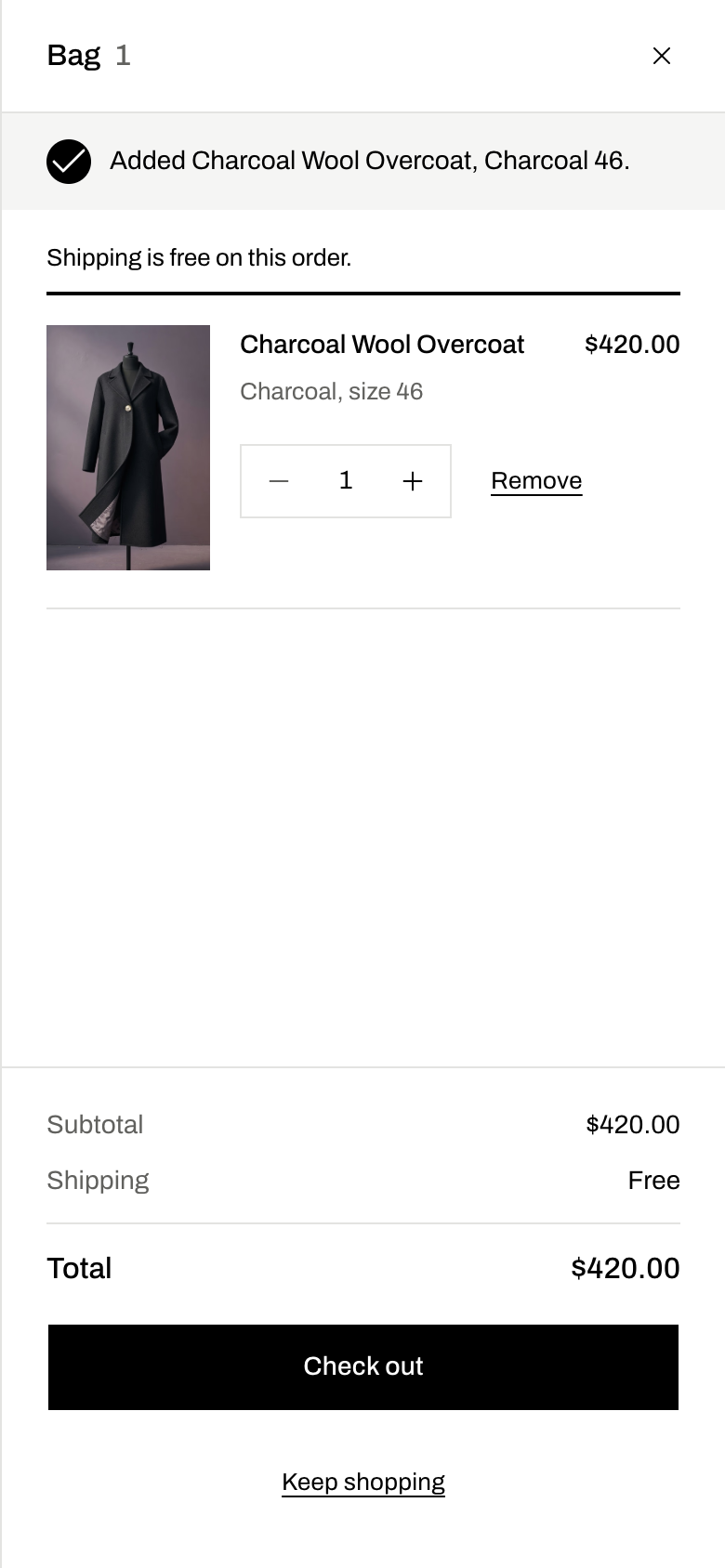
Marlow is a small ready-to-wear shop. The public floor shows each piece with its cloth, how to care for it, and how it fits, in dollars. The bag lives in a drawer. Checkout is one page: contact, ship or pick up, and payment. A guest can buy. A Neon Auth account keeps that person's orders. The desk at /desk moves orders and corrects stock. The owner, at /owner, sets prices, sizes and colors.
- Year
- 2026
- Role
- Full-stack
- Platform
- Angular 22 SSR · Neon Auth
- Data
- Neon Postgres
The problem
A shop with pieces from $89 to $420 has to look worth the garment, get from the floor to the bag in a few steps on a phone, and let the staff work the day's orders apart from the catalog. Payment is at the shop, by bank transfer, or in cash when the parcel arrives. The session has to stay alive after a deploy. A browser does not keep Neon Auth's cookie when another domain sets it, so the shop sets its own.
The solution
Angular 22 renders the floor, the piece and the atelier on the server. The bag, checkout, account and desk render in the browser. Prices are integer cents. Shipping is $8, and free from $200. Pickup stores no address, and that order follows its own track: preparing, ready, picked up. Pay at the shop appears only for pickup. Cash on delivery appears only for a parcel. Neon Auth is used through the shop's own domain. The shop session is a token signed with a key derived from the database, so a restart keeps it. The browser never receives the connection string. Mail leaves from the Node server.
Screenshots
Tech stack






 Source code Documentation
← Back to Featured
Source code Documentation
← Back to Featured